
.jpg)
Blogs
From Farm to Port: How a Lentils Exporter Operates
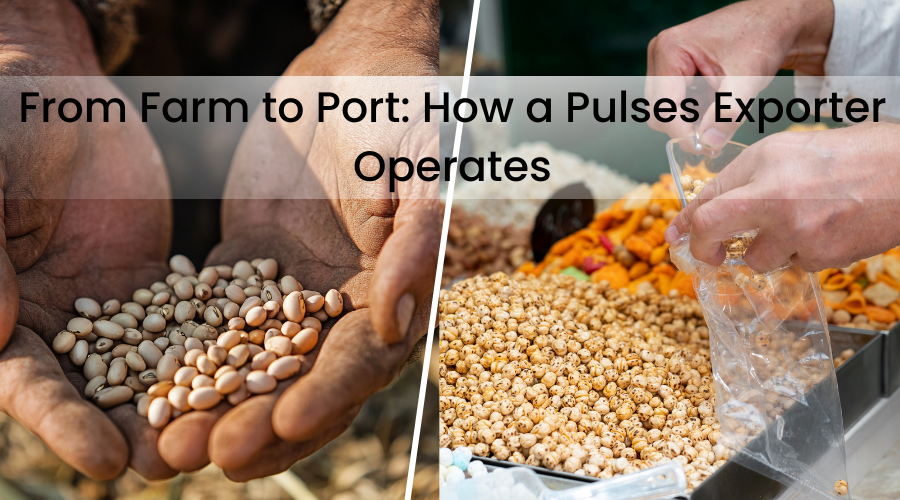
Almost every continent consumes pulses, especially Asia, Africa, and South America. Asia is probably the biggest consumer of pulses of all kinds, especially because of Indian and Pakistani consumers. These two largest markets make the demand for pulses remain at peak since countless dishes are prepared solely based on them. Every lentils exporter is aware of these demands, and that makes them meet global needs precisely. From the farms to the ports, the pulses cover a long distance. Farmers have to grow tons of pulses to meet global demands. Then, industrial operations ensure the quality, appearance, grading, and presentation meet the market requirements. They perform multiple operations to remove impurities and to classify them according to their grades. This entire process takes place in different steps that you will find in this blog.
1. Farm Stage
The first stage is farming, where everything begins. This is where the initial stage starts, where farmers choose suitable land, climate, and every environmental condition to grow pulses or lentils. Every pulses distributor knows about it, and the entire quality of lentil depends on this stage. Some use organic, and some use inorganic methods to grow pulses. Here is how it goes.
Seeding Process
The seeding process is all about sowing the natural or inorganic seeds. In this modern age, the use of inorganic methods is more common because of the higher yields. Since organic farming is more expensive and complex, lentils exporters have to go for inorganic methods. The seeding process also contributes to the cost of farming and the final price of pulses in the market. Farmers are experts in this field who choose seeds based on the type of market they need to serve. After the selection of seeds, they sow them according to the standard operating procedure.
Fertilization Process
The soil needs support to grow those seeds because macro and micronutrients are the primary requirements of seeds. Unless those nutrients are fed to the soil, the seeds will not grow at the speed they need to. Therefore, fertilizers that contain NPK and sulfur are the key to better growth of seeds. The support for plants, roots, and pulse production relies on the fertilization process. These fertilizers speed up the process. Therefore, a pulse supplier has to ensure the backend or farm process has enough fertilizers for the continuous growth of pulses.
The selection of fertilizers is very careful. Farmers choose them based on the soil condition, PH level, and lots of other factors. Choosing the wrong NPK ratio can change the outcomes, which means it is a crucial step. They need to adjust the application of fertilizers to the soil according to the crop’s requirements.
Weed and Pest Control
Besides fertilizers, lentils need protection from pests and weeds. These two threats cause severe damage to the crops, and farmers have to ensure their prevention as a priority. For weed control, they use mulches and herbicides. Mulches prevent the sunlight and other essential nutrients from reaching the weeds, while herbicides eliminate the remaining chance of weed growth. Some use natural mulches, and some use plastic mulches. Both have advantages and disadvantages for crops. However, the weed control becomes better when the sunlight is blocked through opaque plastic mulches.
Then the pesticides do their job of killing pests and bugs that harm the crops. Lots of larvae and mature bugs feed on the crops, which damages the production. Therefore, pesticides eliminate the pests of all types that surround the crops. The selection of pesticides and herbicides needs to be precise because too strong chemicals can damage the crops. If the crops get deep penetration of chemicals, they will affect the end consumers. Farmers choose the chemicals that are less harmful to the crops and soil, and more effective against the pests.
Harvesting and Departure for Factory
Then the time comes for the lentils exporter to prepare for the harvesting process. Although the farmers do this part just like the rest of the previous ones, the exporters have to ensure things go well. The harvesting process helps exporters estimate the quantities they would transport to factories. That allows the lentils exporters to further estimate how much market demand they could meet. Here is another thing, and that is the impact of further processing. When the farms dispatch the pulses to factories, they are aware of the reduction in quantities. This reduction takes place after further processing and cleansing operations.
2. Industrial Stage
Here is the industrial stage, which ensures the pulses are in a clean and well-presentable form. Of course, there are effects of pesticides and other chemicals on pulses after they are harvested. That means they need further processing to come out as clean and free of waste elements. All pulse suppliers have to go through this industrial stage to provide a safe, clean, and packaged supply of pulses of all types. Here is the entire process.
Initial Cleaning
This step includes the primary cleaning of pulses to remove the basic impurities from them. They contain lots of dirt and other environmental elements that could harm the end consumers. To eliminate this health risk, pulse exporters use machines that carefully sift the pulses to remove the solid dirt from them.
Moisture Removal
Then the moisture removal process takes place. Industries have to remove moisture from the lentils/pulses to remove every risk of mold, pest, and disease in them. These elements could possibly spoil any crop, and to make crops safe, this moisture has to be removed. Machines remove the moisture from the pulses to make sure they remain safe for long-term storage, transportation, and consumption. Industrial users have to ensure that the damage does not take place in any way. The quality and freshness of pulses depend on the moisture level, and the less moisture there is, the better the quality will be.
Secondary Cleaning or Classification Process
Then the lentils exporters perform another cleaning process, which is the secondary one. This process makes sure there are no chemicals or harmful elements left on pulse grains. Since farmers have to use multiple chemicals to prevent pests, weeds, and environmental threats, those chemicals leave long-term effects on crops. Therefore, there is another cleaning process that takes place to eliminate any risk remaining in pulses. This secondary cleaning performs a classification by separating the damaged and spoiled kernels.
Basically, it separates the grains based on their sizes, shapes, and weights. Classification machines have air, magnetic, and gravity filters to perform these classifications. They sort the pulse grains in different grades to supply them at different price ranges.
Peeling Process
Then comes the peeling process, where the machines peel the pulses in bulk. They carefully remove the shells by preventing damage. Multiple filtration screens are present in these machines to remove the peels and blow them with fans attached inside.
Splitting Process
The second last process in the filtration step takes place by splitting the kernels. All pulse suppliers have to perform this step to make the pulses presentable and edible for the end users. These pulses need to be split because that’s how they are served. So, companies have to ensure the machines split them carefully without breaking the kernels. Splitting screens and fans perform this function inside the machines to provide consistent results.
Lentil Polishing
After going through all these steps, the pulses appear dull and dry. They need a final touch before the packaging process. Pulse exporters polish them by placing them in polishing machines. These machines remove every remnant of dust and hard pollution stuck on the surface of pulses. Machines clean the pulse kernels and release them in a clean and shiny form.
Packaging Process
Lastly, the pulses go through the packaging process. The packaging machines make their packages in different sizes and grades. Companies use their labelled bags and cartons to finalize the packaging process. Once these pulses are packed, they are ready for the dispatching process towards the ports and local warehouses.
3.Shipping Stage
Pulse exporters complete the documentation regarding the safety measures and compliance. Since the destinations require documents for the clearance process, exporters ensure all the documents are there to back their safety claims. Fumigation certificate, phytosanitary certificate, and many other documents have to be present for the clearance of pulses. Customs officials need these documents along with samples (if needed). And that’s how the shipping process takes place for the global dispatching.
How Much Impact Does a Reliable Lentils Exporter Make on the Market?
Everything changes when superstores, distributors, and wholesalers procure from a reliable exporter. Quality is the key to healthy outcomes, and if one compromises on it, the entire brand suffers. Therefore, it is better to choose a trusted pulse supplier than to save cost by choosing a non-reliable supplier. A reliable one might charge a little extra, but that will save the entire brand image in the market. A consumer can switch rapidly in this age of fast consumption. The time of monopoly has long gone since mega suppliers from China joined the industry. Therefore, it is better to choose a reliable supplier than to save money by reducing the quality.
Whether you are a trader or a commercial consumer, like a restaurant, you must choose an exporter that meets quality standards. That quality will lead to trust in the end consumers, and the name of your business will remain stable. Pulses are a popular choice in South Asia, Africa, and South America, which shows that this huge market really depends on top exporters. Compromising on quality will be compromising on the competition. Once a consumer switches to another brand, it will be way more expensive to bring back that lost customer.
Conclusion
Pulse suppliers have to perform an extensive process to ensure the pulses grow, reach factories, and then reach ports. Each step contains lots of sub-steps that contribute to the safe and clean supply of pulses for end consumers. Supermarkets, distributors, online stores, and local stores need a bulk supply of pulses that are safe for consumers. They can rely only on their trusted brands, and those brands rely on their backend farming process/exporters. It means the farming and processing of pulses have to be strict in order to meet health requirements.
Recent Post
Choosing an edible oil supplier is a decision that directly impacts the profitability of
READ FULLThe global demand for sunflower oil, kernels, and seeds is massive. The farming, cattle,
READ FULL