
.jpg)
Blogs
Bulk Fertilizer Supplier vs Agro Commodities Supplier: What Buyers Should Know
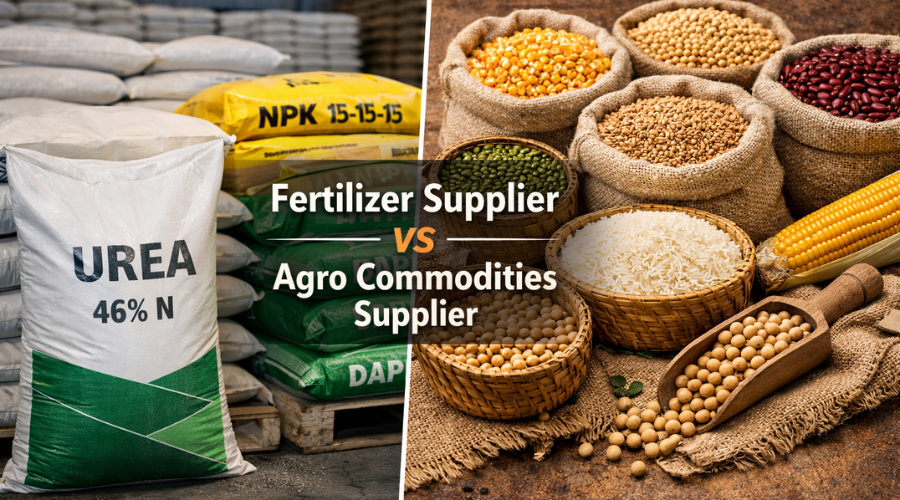
Finding the right supplier can be hard when you are new to agriculture procurement. Most customers waste their time calling suppliers that do not necessarily suit them. Others even require fertilizers to carry out farming activities; instead, contact commodity traders. Some others want to sell grain and mistakenly contact the fertilizer manufacturer. This misunderstanding is a waste of time, frustrating, and it postpones critical business decisions.
The difference between choosing a bulk fertilizer supplier or an agro commodities exporter determines your future business activities. The use of each supplier type in the agricultural supply chain varies significantly. A fertilizer supplier deals with farm inputs, which increase the output of farms. An agro commodities distributor deals with processed or finished agricultural products. The differences between these two suppliers will help identify the best partner for business relations.
Understanding Bulk Fertilizer Supplier
Bulk Fertilizer Supplier provides large quantities of fertilizers to support farming. Among the fertilizers available to these suppliers are NPK mixes, urea, diammonium phosphate, and organic fertilizers. Every aspect of their business is designed to support farmers and agricultural activities, improving soil health and crop production.
Such suppliers deal mainly with farmers who require fertilizers on their farms, distributors, whose sales are made directly to retail agricultural outlets, and agri-dealers, who sell to farming communities. This relationship is about consistent quality and delivery during periods of high demand, planting, and growing seasons. A bulk fertilizer supplier realizes that time is everything in the farming industry. Any delays during the planting season can impact the entire harvest.
Orders placed by bulk fertilizer suppliers are typically in multiple tons or even container ships. An average-sized farm can have 10 to 20 tons of NPK fertilizer ordered during a growing season. A distributor may purchase 100 tons to store in inventory across various retail outlets. These large quantities enable competitive pricing and ensure sufficient supplies on farms during the growing seasons.
The fertilizer supply business is sensitive to seasonal demand fluctuations. The orders are high at the beginning of key planting seasons when farmers are fielding, and distributors are filling up. Suppliers must maintain large inventories and maintain effective logistics to deliver during these concentrated demand periods. The most successful suppliers will work ahead with their buyers so they are available when farms need the products most.
What is an agro commodities Exporter?
An agro commodities distributor operates in another segment of the agricultural value chain. These suppliers trade in harvested agricultural goods that are ready for processing or export. Their inventory consists of pulses, seeds, and oilseeds as well as grains.
It focuses on a business model in which farmers or market aggregators sell their products to buyers who process the commodities or sell them in local and international markets. An agricultural products supplier may purchase wheat from several regions, sort it by quality, and export it to flour mills in foreign markets.
The main customers will be food-processing firms that require raw materials, commodity traders who purchase and sell agricultural goods in international markets, and exporters who sell goods to international markets. A spice manufacturing firm may place an order for several containers of raw turmeric. A grain trader can buy hundreds of tons of wheat to resell it. The transactions focus on product specifications, origin certifications, and delivery schedules.
Global agro suppliers typically maintain supply relationships across multiple countries. They know about global quality requirements, exportation documents, and logistics. Some specialize in specific products, such as oilseeds and spices, whilst others offer a variety of agricultural commodity portfolios.
Key Differences Buyers Should Know
Product range
The most obvious difference between these supplier categories lies in their product ranges. A fertilizer supplier will stock goods that are planted into the ground to enable crops to grow. An agro commodities exporter offers products grown in the ground after harvest. This is the fundamental difference across all aspects of how these businesses operate.
Buyer type
The types of buyers among the two supplier groups differ significantly. Fertilizer suppliers cater to the demand for farm inputs. Their customers are busy working on farms or sponsoring farms. Commodity suppliers work with buyers of finished agricultural products for trading, processing, or manufacturing. Their customers transform raw agricultural products into consumer goods or repackage them for sale in other markets.
Supply chain focus
The supply chain attention brings about another major distinction. Farm input suppliers are interested in the supply of products to farms before they get planted and during growing seasons. Their logistics focus on rural delivery, adequate chemical storage, and handling spikes in demand. Commodity suppliers control the post-harvest supply chain, which includes aggregation, quality sorting, storage systems, and international delivery via export logistics.
Packaging and logistics
The packaging and logistics needs of the two differ significantly. The fertilizer shipment usually weighs 25-50 kilograms, in bulk bags or loose bulk for large orders. Commodities are exported in bags, containers, or bulk, depending on the product and destination. Food-grade packs are essential for products intended for human consumption channels. Export deliveries require fumigation and phytosanitary documents.
Usage purpose
These suppliers are greatly differentiated by use purpose. Fertilizers are purchased as production inputs. They use these products on fields to facilitate crop growth. The fertilizers are not resold; they are used in agricultural activities. Agricultural commodities are traded as commodities. These products travel through supply chains, and often, within these chains, they change hands before reaching final processors or consumers. The commodities retain their shapes and may be resold, processed, or exported.
Which Supplier Is Right for Your Business?
Choosing the right supplier type based on your operations starts with understanding your business. Choose a bulk fertilizer supplier for agricultural operations, serving farmers or distributing inputs. Farmers need a reliable source for planning planting seasons and fertilizer. Agricultural cooperatives serving member farmers must have reliable, high-quality bulk fertilizer sources. Retailers' agricultural supply stores should sell fertilizers, seeds, and equipment.
Choose an agro commodities exporter in case your business deals with agricultural products, refines raw materials to a finished product, or exports all commodities to international markets. Food processing industries require constant sources of quality grains, pulses, or spices. The export business needs suppliers who know the international quality standards and documentation. Commodity dealers need suppliers with diverse access and competitive prices to buy and sell agricultural commodities.
There are businesses that, in fact, require links to both types of suppliers. Large-scale agricultural operations may purchase fertilizers for personal farming and sell crops through commodity markets. Integrated agricultural firms operate across the value chain. Rural cooperatives purchase fertilizers to provide to member farmers and collect and sell products harvested by members.
You know your core business, so you can easily know who to select as a supplier. Input-oriented businesses require fertilizer suppliers. Commodity suppliers are required in output-oriented businesses. Both relationships, managed independently based on their respective needs, may benefit from integrated operations.
What to Look for in Any Supplier
Quality standards
In both types of suppliers, some quality indicators are important, no matter what type of supplier you need. Any good supplier relationship is based on quality criteria and consistency. Fertilizer suppliers must supply products with an assured nutrient level that is within specifications. Commodity suppliers should provide agricultural products to agreed quality grades without excess foreign matter or moisture.
Certifications
Certifications confirm that suppliers comply with applicable standards and regulations. The international suppliers must be certified for their products and target markets. Organic fertilizers and organic agricultural products also have organic certifications. Food safety qualifications, such as HACCP, can be applied to a commodity supplier serving food-processing customers. Quality management certifications signify adherence to standards.
Bulk supply capability
Bulk supply capability ensures suppliers can consistently meet your quantity requirements. Strong suppliers maintain sufficient inventory during peak periods. They have storage facilities that protect product quality. Their logistics will be able to process your order quantities without delays or partial deliveries that disrupt their operations.
Transparent pricing
Transparent pricing fosters confidence and enables effective budget planning. Good suppliers have transparent pricing systems with no costs involved. They determine factors that affect prices, including raw material costs and exchange rates. Transparent suppliers also help buyers understand market conditions, not just through quotes.
Reliable logistics
Good suppliers and mediocre suppliers are divided by reliable logistics. All deliveries must be on time, as delays can disrupt production and even result in lost vital agricultural periods. Good transportation will prevent damage and quality deterioration. Good tracking systems enable buyers to monitor shipments and prepare accordingly.
Clear communication
Effective communication helps avoid arguments and resolve problems quickly. Suppliers are expected to respond to questions promptly and provide accurate information. They are supposed to take the initiative to inform you about possible delays, depending on market conditions affecting your orders. Communication will create a partnership rather than a transactional relationship.
Why Supplier Choice Impacts Your Business
Cost control
The choice of supplier type directly impacts your costs and profitability. Poor supplier selection wastes time due to poor communication about products and requirements. Customers may receive incorrect quotes or inappropriate facilities. The numerous unsuccessful searches are delaying the procurement process while competitors continue operations. The right supplier will understand what you want and provide solutions tailored to it.
Product quality
Whether trading or farming, it will be the quality of products that will dictate your downstream success. Low-quality fertilizers yield lower crop yields, which in turn affect farm profitability. Low-quality agricultural products lead to customer rejections, price wars, and spoiled business relations. Good suppliers save your image and performance in the business.
Delivery timelines
Delivery timelines can categorize agricultural operations. Failure to deliver fertilizers on time misses planting windows, resulting in low yields. Late deliveries of commodities will violate your customer agreements, incur financial penalties, and damage your customer relationships. Trusted suppliers know that schedule is extremely important in agriculture and food supply chains.
Long-term partnerships
Competitive advantages are established through long-term relationships with the suppliers. Reliable suppliers prioritize your orders during shortages. They provide superior payment conditions to their established customers. They exchange market intelligence that can assist you in making appropriate business decisions. You can only establish these relationships with suppliers that share their business models with what is really required.
Conclusion
The services of wholesale fertilizer and agro commodities exporter play distinct roles in the agricultural economy. Fertilizer vendors focus on the farm inputs that support crop production. Commodity suppliers focus on harvest commodities, which are loosely traded and processed.
Knowledge of this key difference enables buyers to identify the right partner quickly. The correct selection of a supplier saves time and manages business costs. You need time to identify your needs before approaching suppliers.
Are you willing to find the right agricultural supplier for your business? Begin by specifying the type of farm inputs or finished products you need, then find suppliers in the relevant category.
Recent Post
Choosing an edible oil supplier is a decision that directly impacts the profitability of
READ FULLThe global demand for sunflower oil, kernels, and seeds is massive. The farming, cattle,
READ FULL